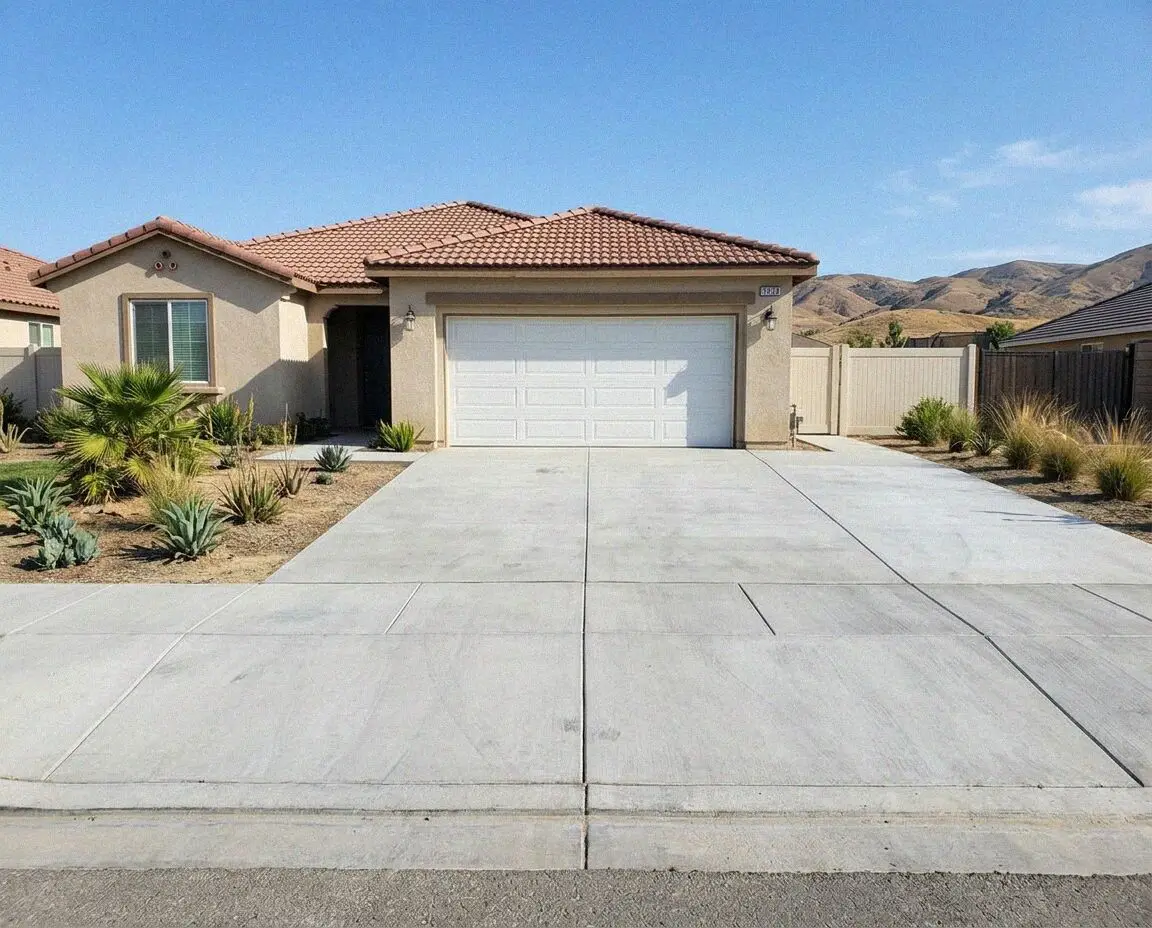
Concrete Driveway Building
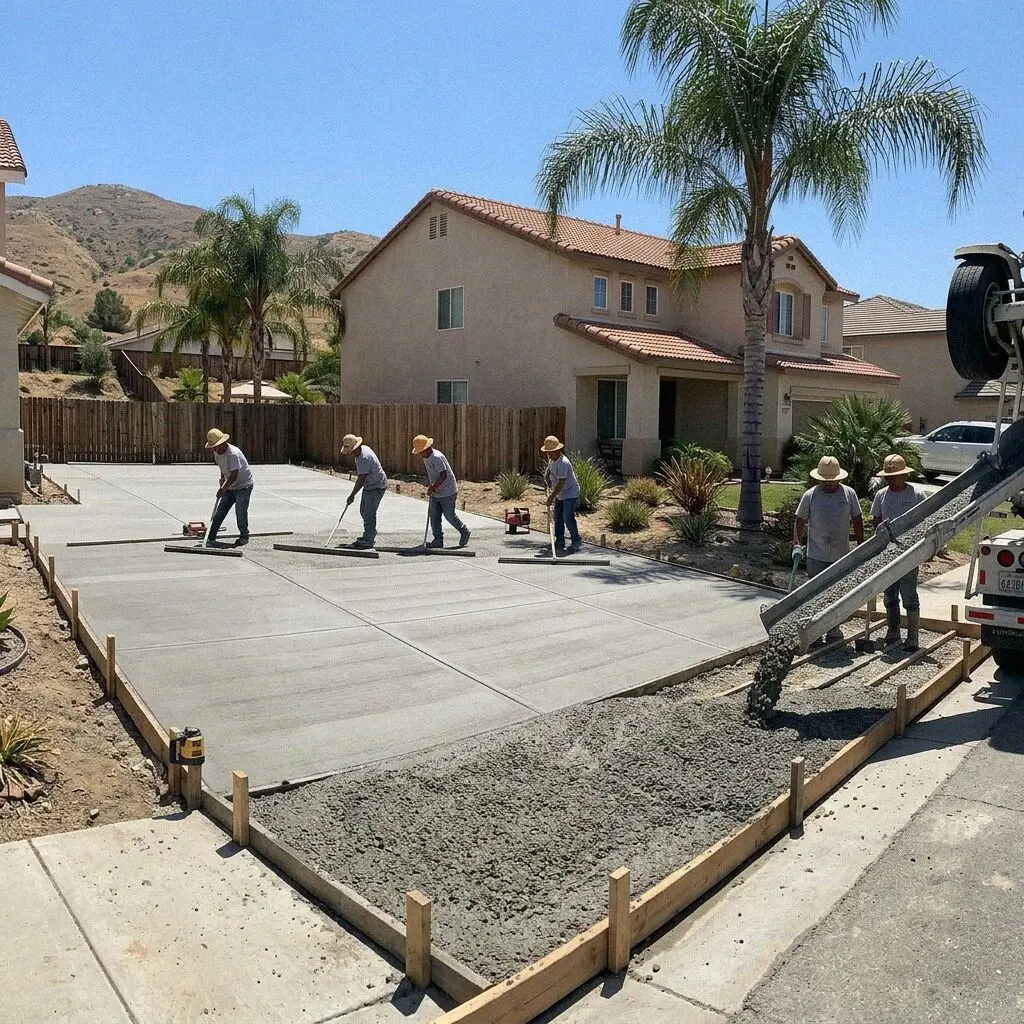
Does clay soil crack your driveway? We pour four inch thick four thousand PSI concrete over a four inch compacted crushed aggregate subbase.

Driveways, patios, garage floors and retaining walls for homes and businesses, from Sunnymead across to Rancho Belago. Every estimate is measured at your property and written before a crew is booked.


 5.0 Stars Rated by our customers · Google, Facebook and the BBB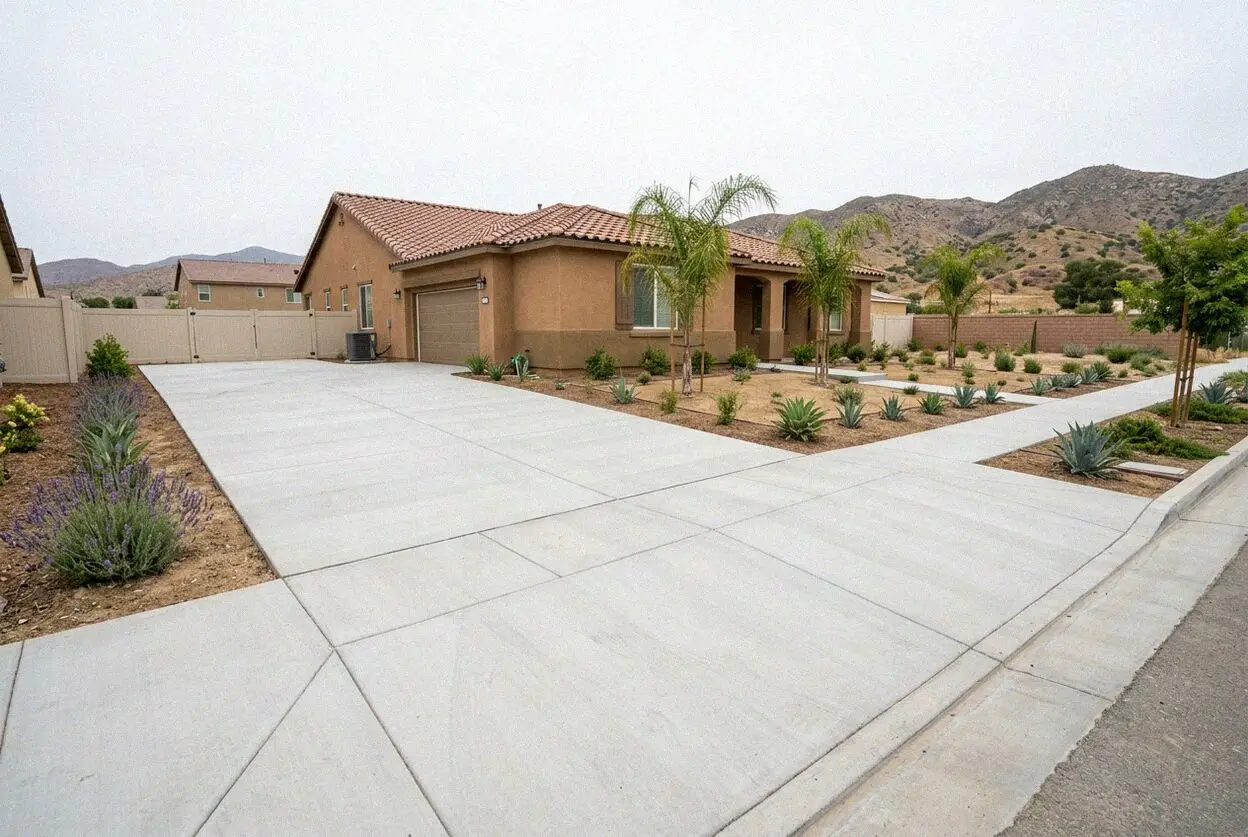
Moreno Valley Concrete Pro works all three of the communities that voted themselves a city in 1984. A driveway replacement, a garage floor broken out and re-poured, a stamped patio, each built to California code.
Does clay soil crack your driveway? We pour four inch thick four thousand PSI concrete over a four inch compacted crushed aggregate subbase.
Will your slab shift on summer clay? We pour four-inch concrete over four inches of crushed rock base with steel rebar across every yard.
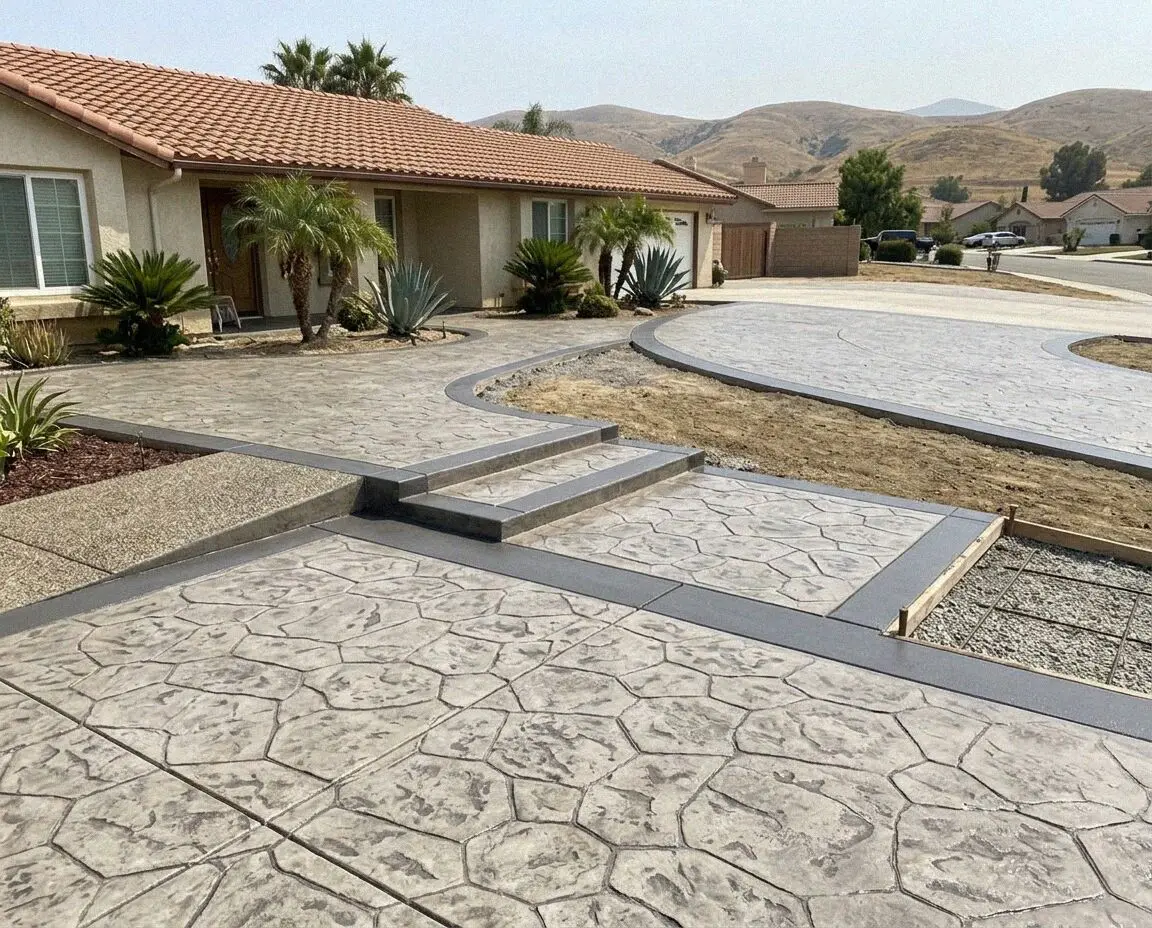
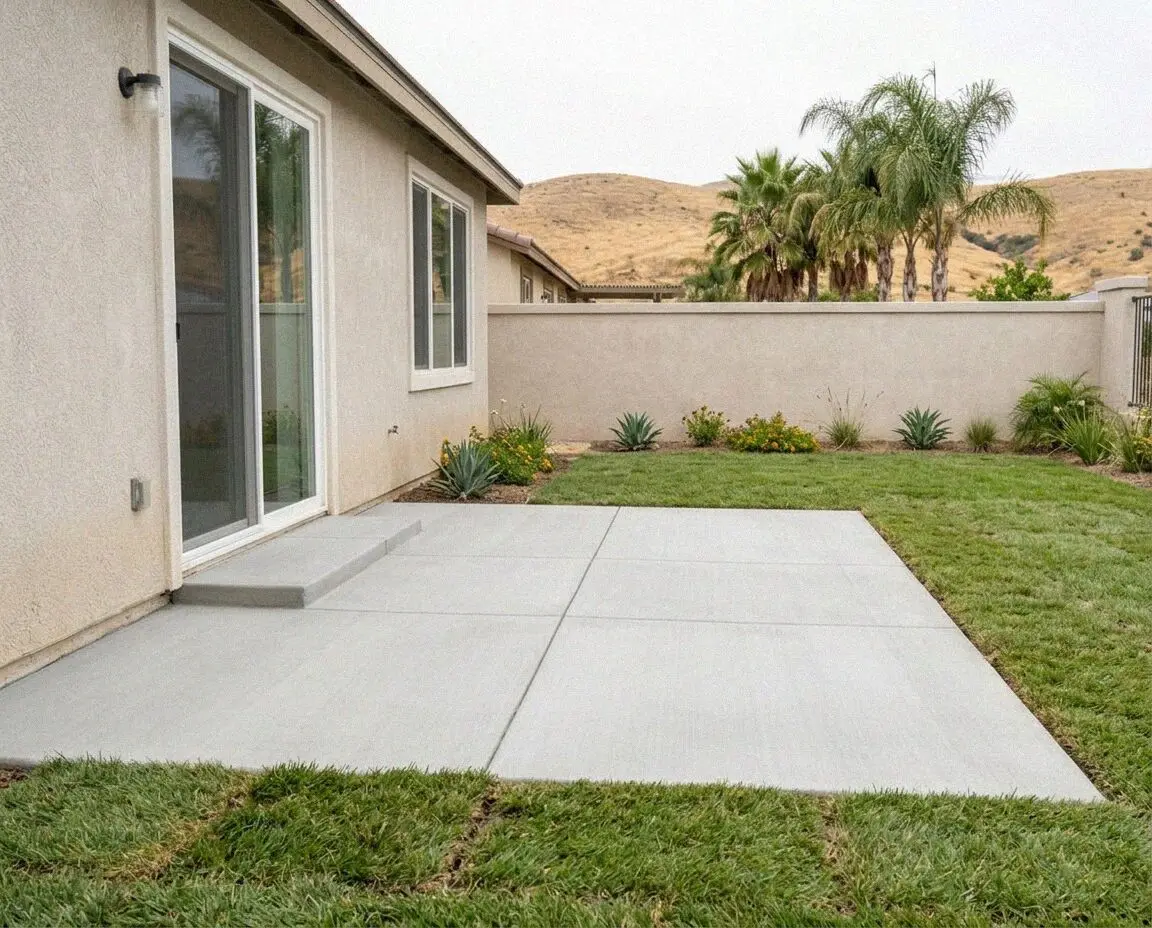
Worried about patio cracks under inland heat? We pour stamped slabs four inches deep over four inches of base with joints every eight feet.
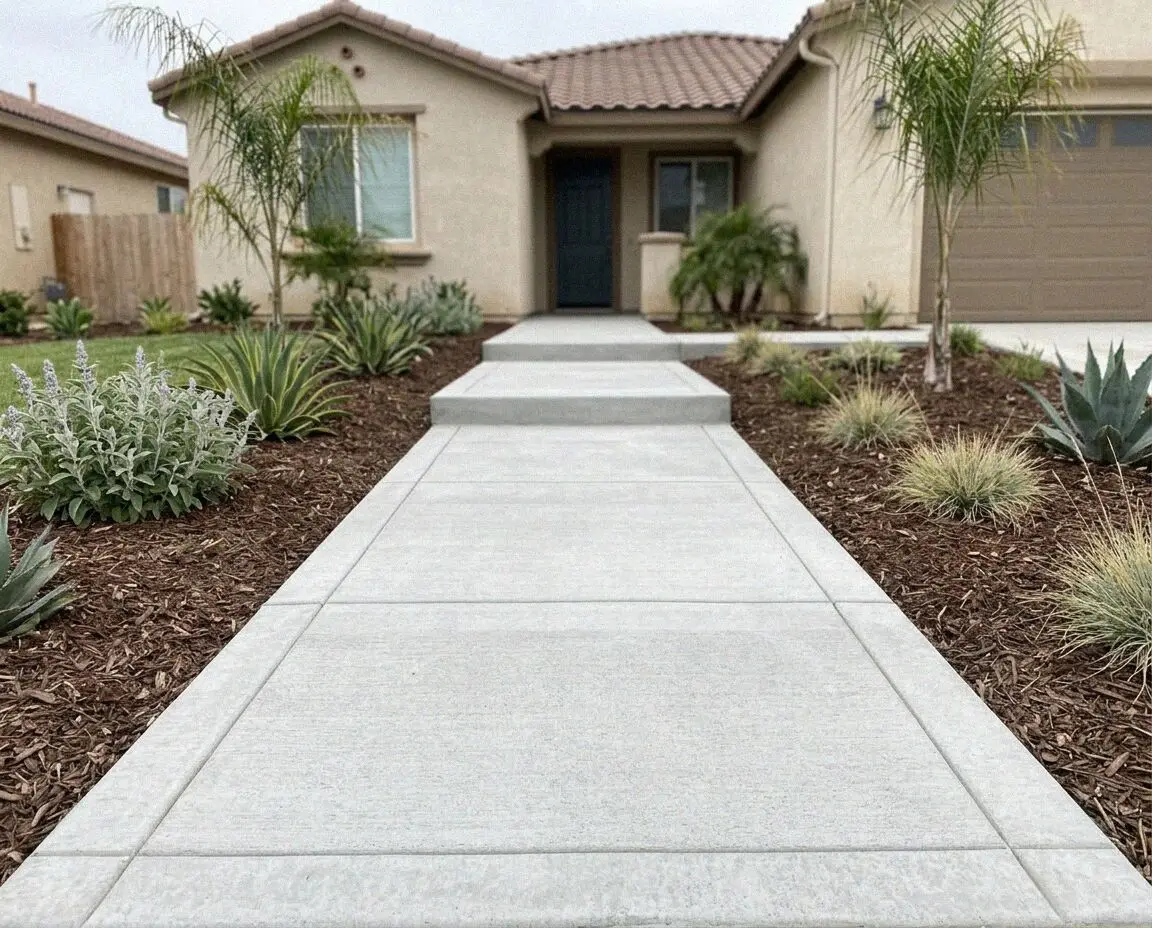
Are clay soils lifting your walkway panels? We excavate unstable dirt, lay a four inch crushed base, and pour four inch slabs at 4000 PSI.
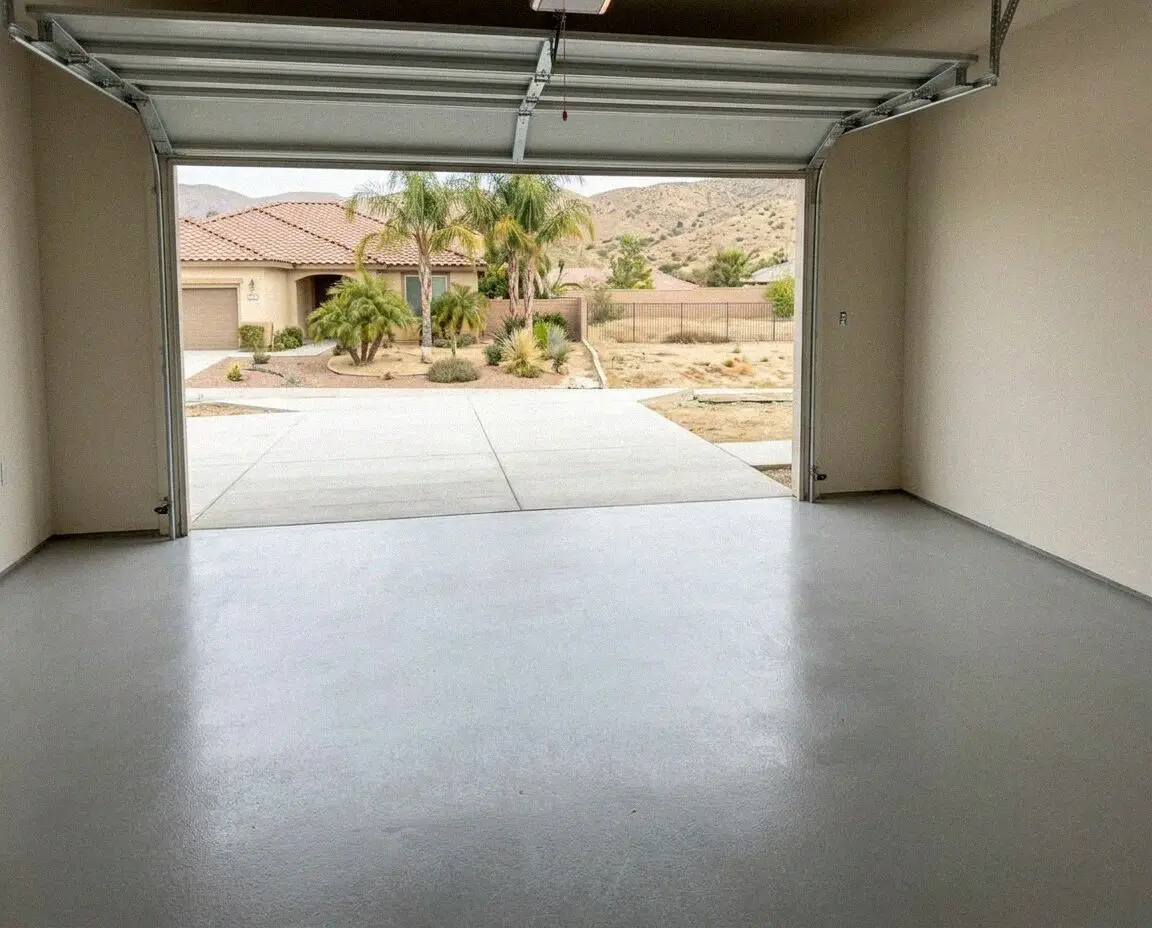
Does vehicle weight crack your garage slab? We pour four-inch slabs over compacted base with steel rebar tied at eighteen-inch intervals.
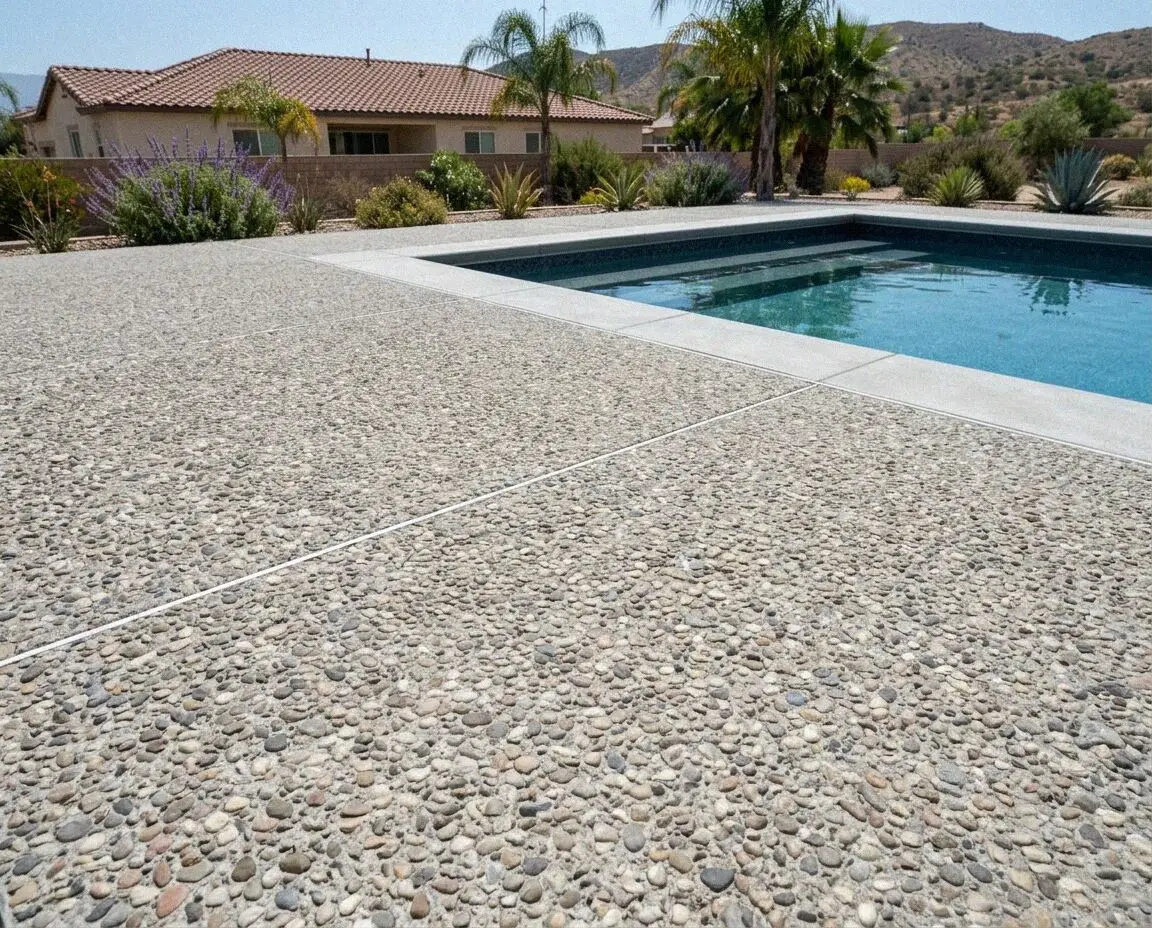
Will dry Moreno Valley heat fade your decorative patio slab? We cast 4 inches of 4,000 PSI mix with integral pigments for durable tone.
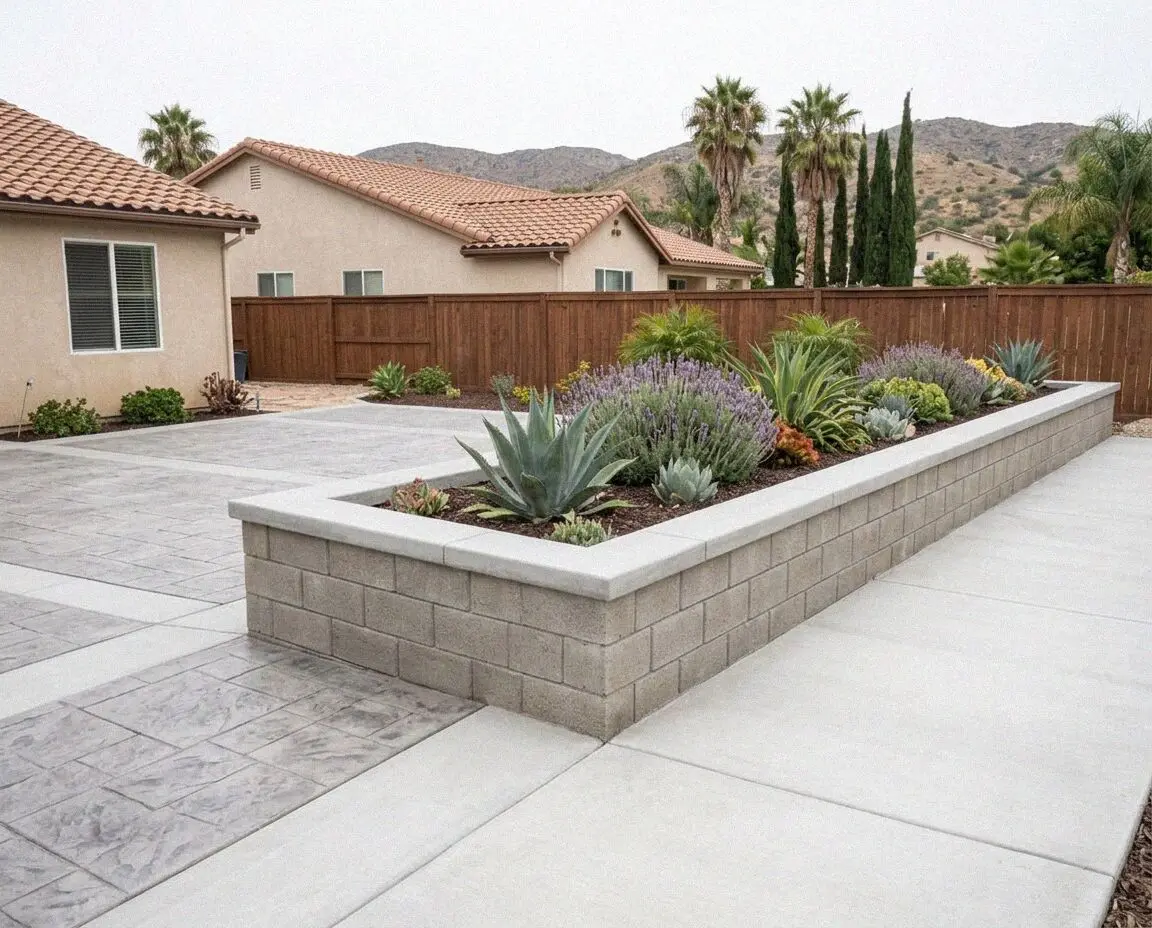
Facing slope slip on your pad? We pour 8 inch reinforced concrete walls anchored by 24 inch footings to stabilize yard grade permanently.
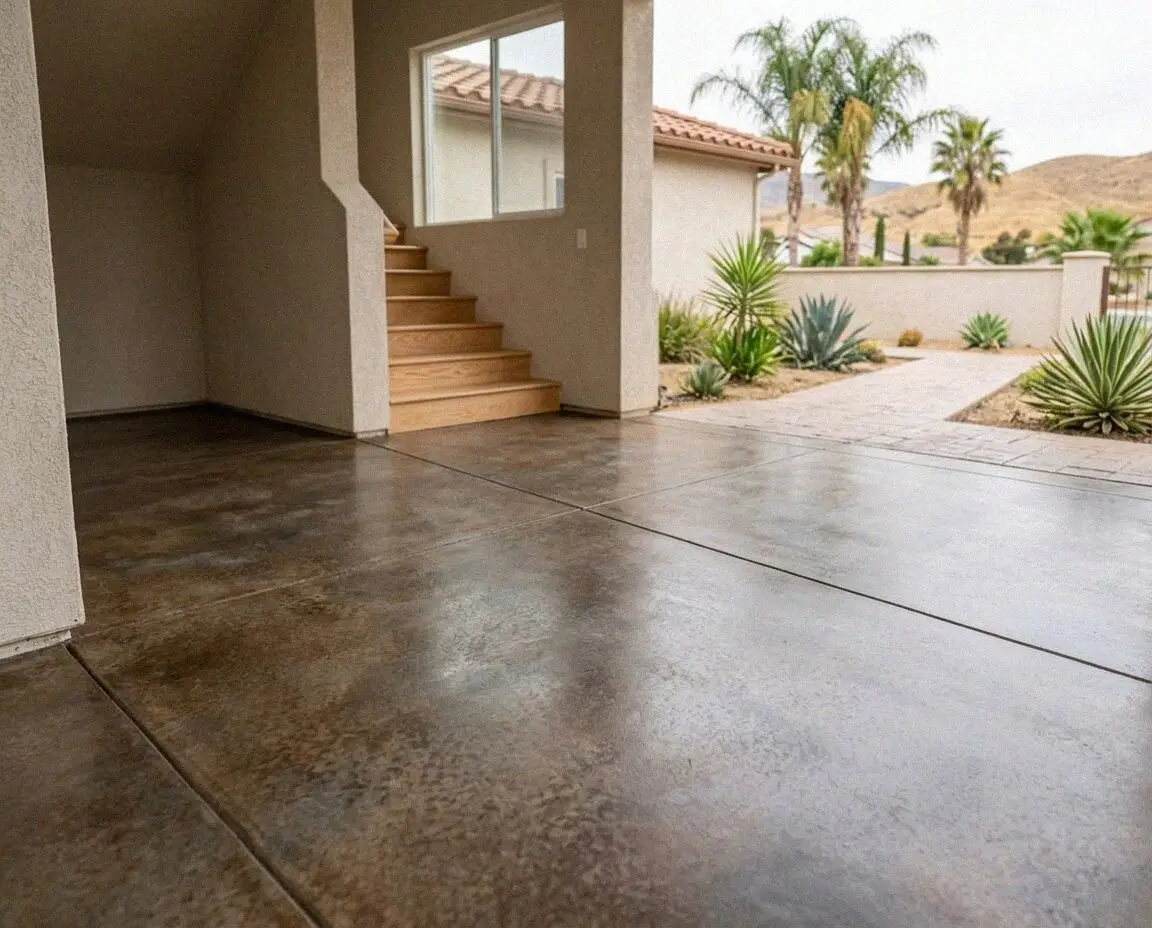
Concerned about interior slab dampness? We cast 4 inch floors over 15 mil vapor barriers and crushed rock to stop moisture transmission.
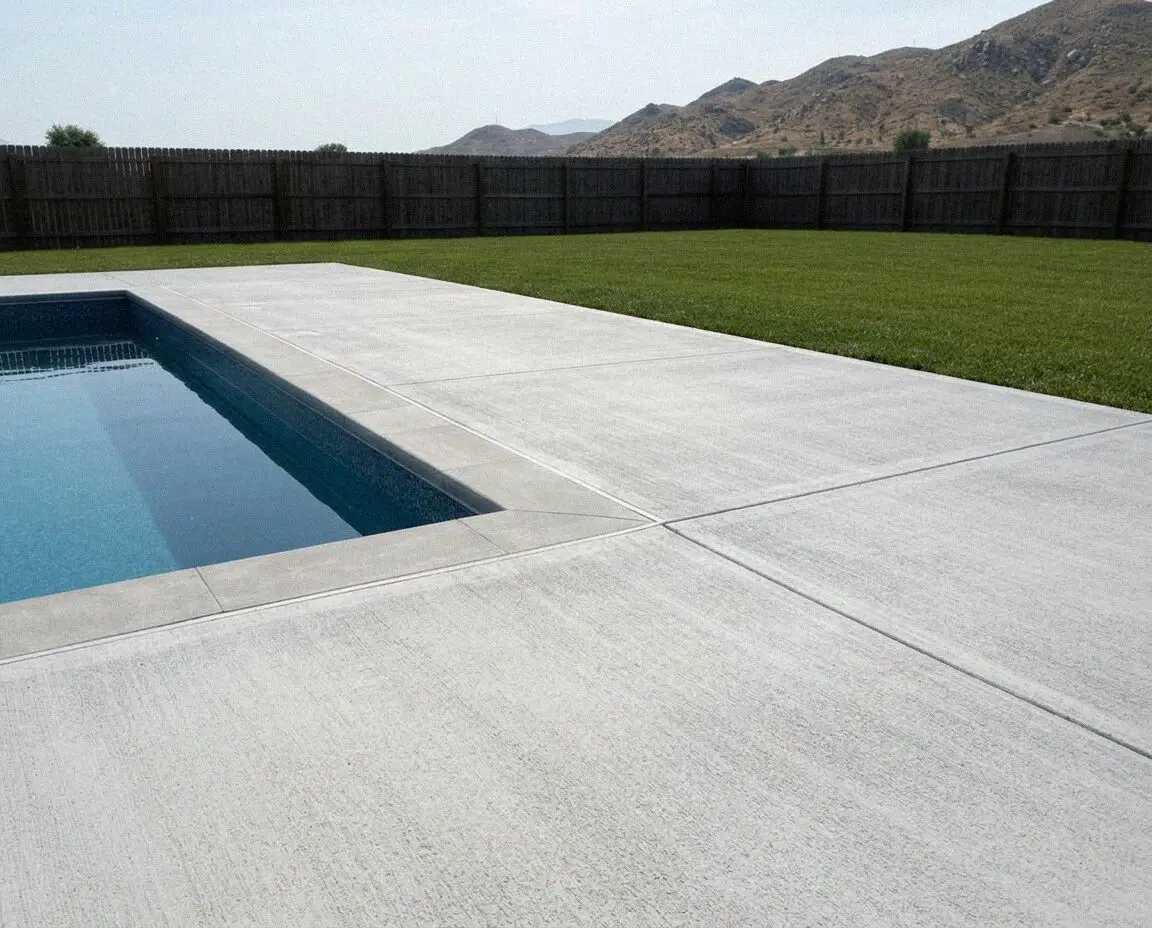
Is your pool deck shifting? We pour 4 inch slabs over crushed aggregate with mastic expansion joints that isolate the pool coping.
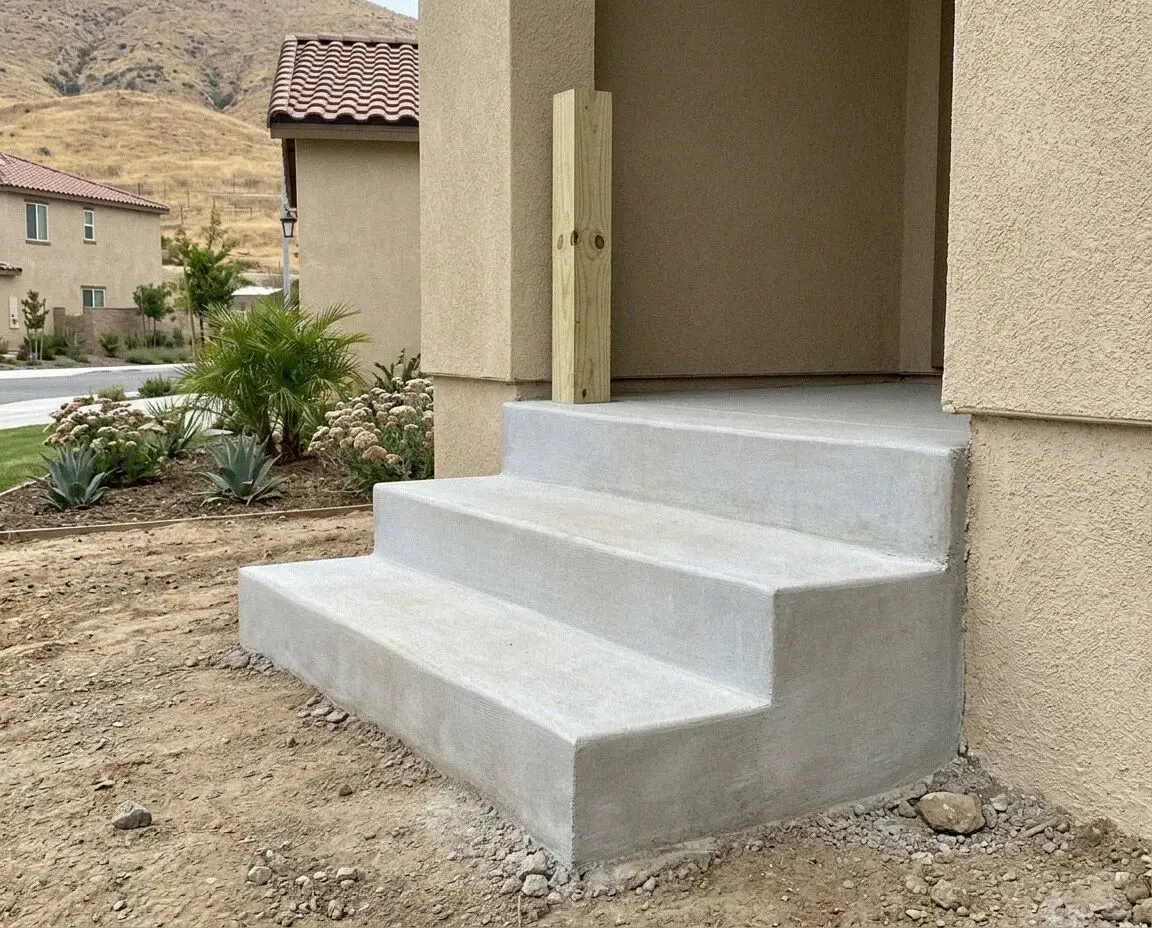
Are your front steps pulling away? We anchor treads with 0.5 inch steel dowels into deep footings to stop shift from expansive clay ground.
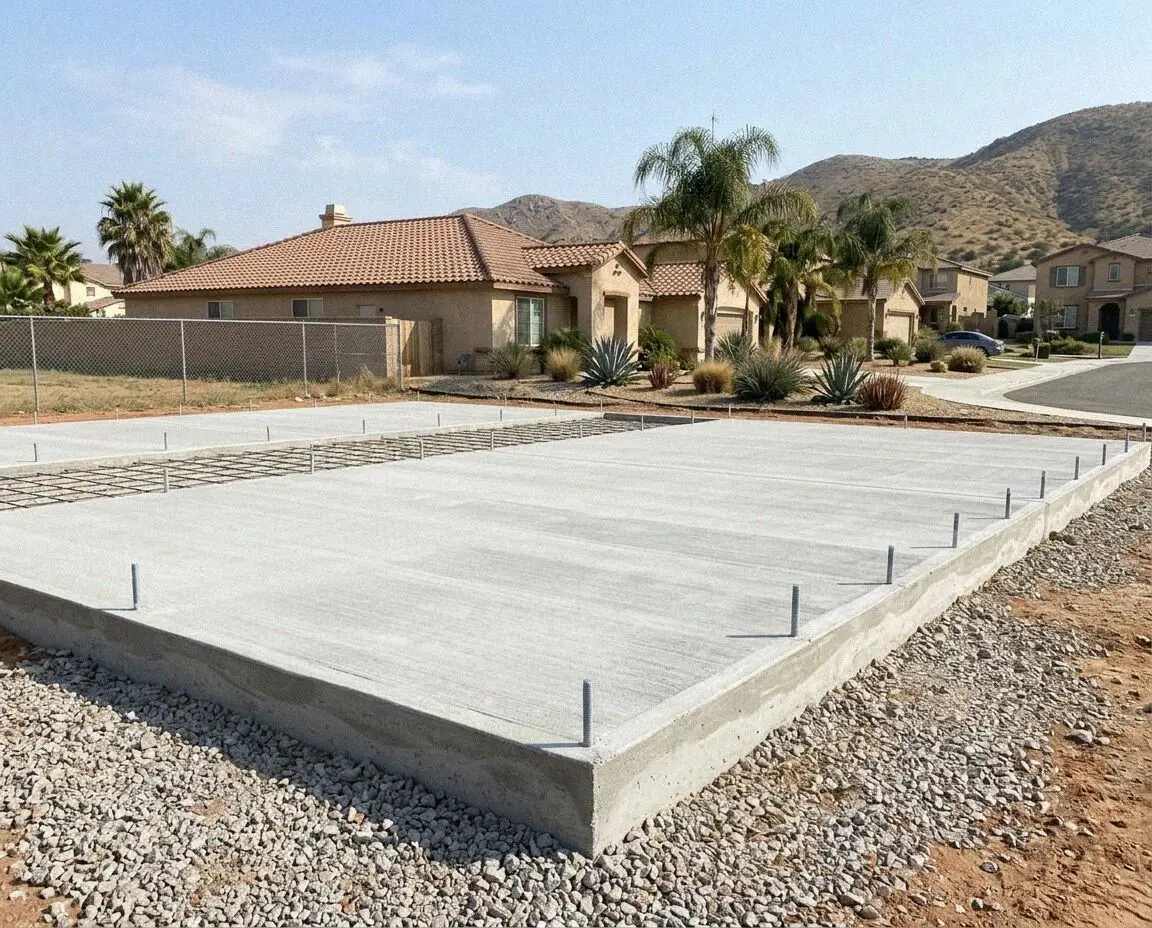
Need a slab that resists shifting clay subgrade? We dig 12 inch footings on 4 inches of crushed aggregate compacted across Moreno Valley.
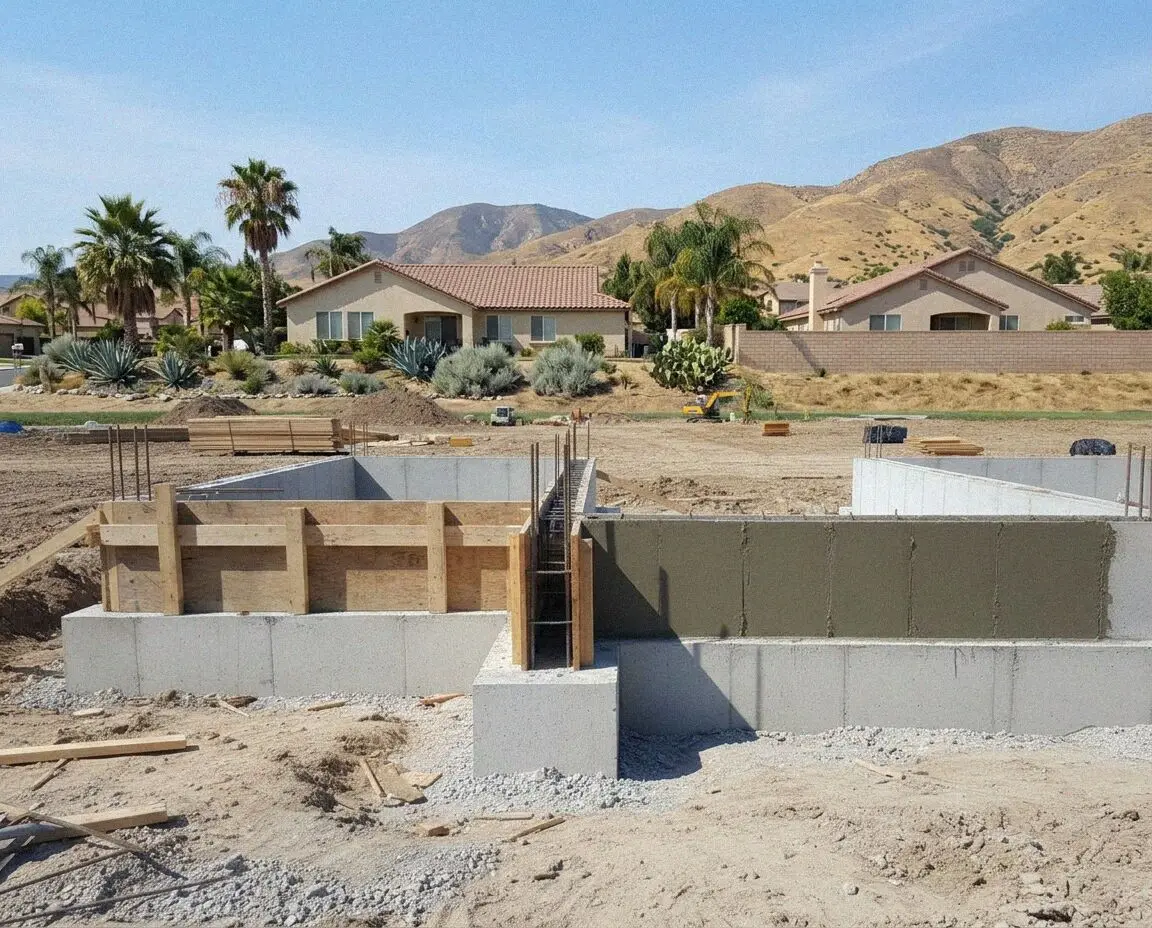
Need a stable build pad on shifting clay? We excavate 18 inch grade beams reinforced with grade 60 rebar over compacted Class 2 aggregate.
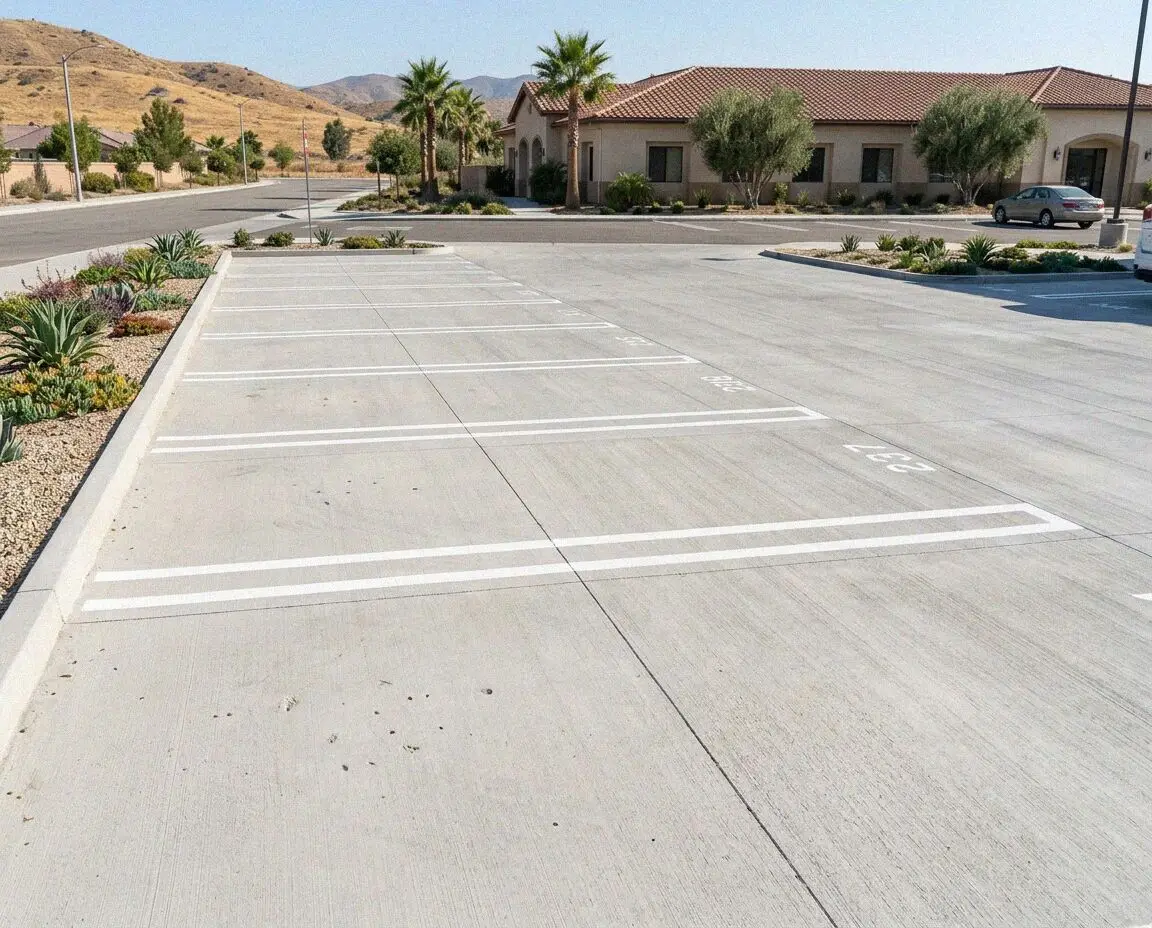
Lot failing under logistics traffic? We pour six-inch parking slabs with 4000 PSI concrete and compacted aggregate across Moreno Valley.
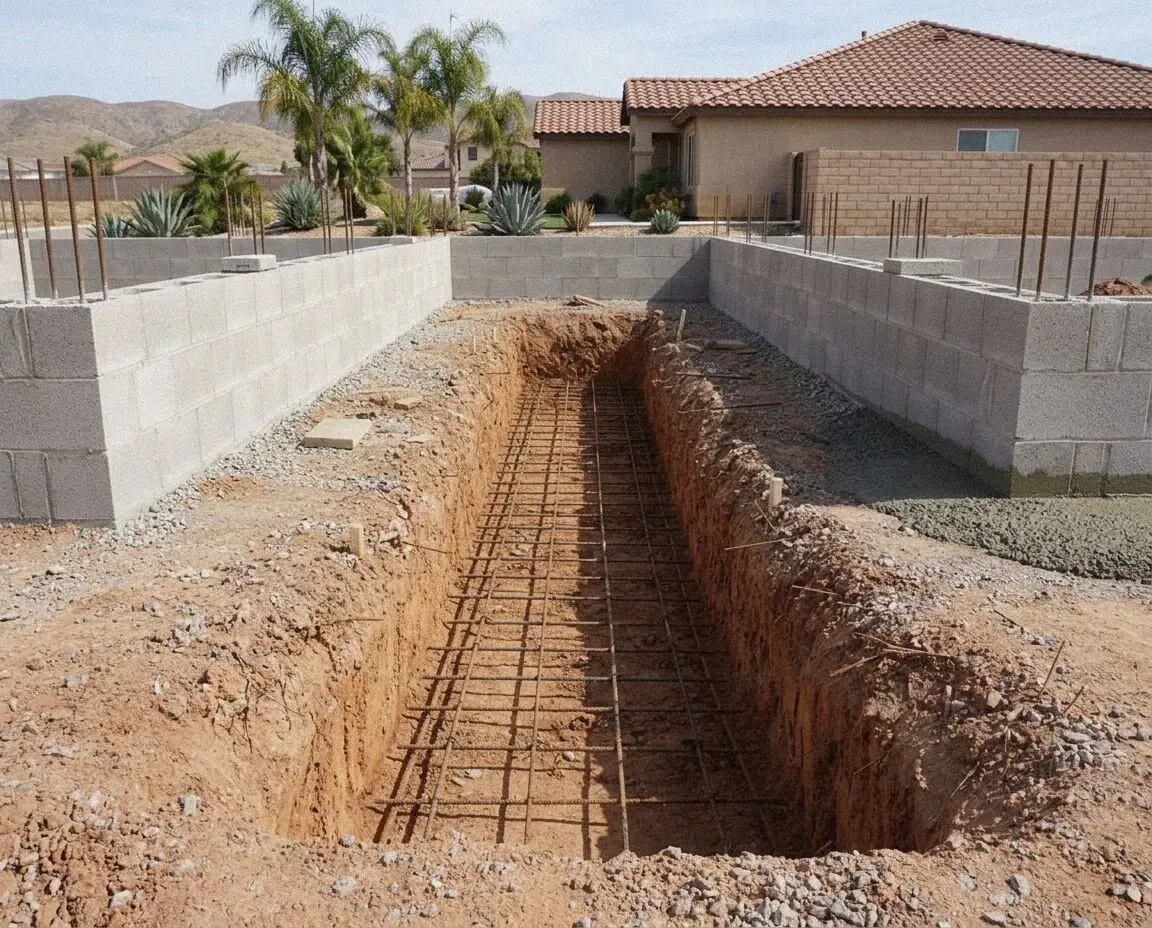
Worried about slab settlement? We cast continuous footings twenty four inches deep with tied rebar to anchor in shifting Moreno Valley clay.
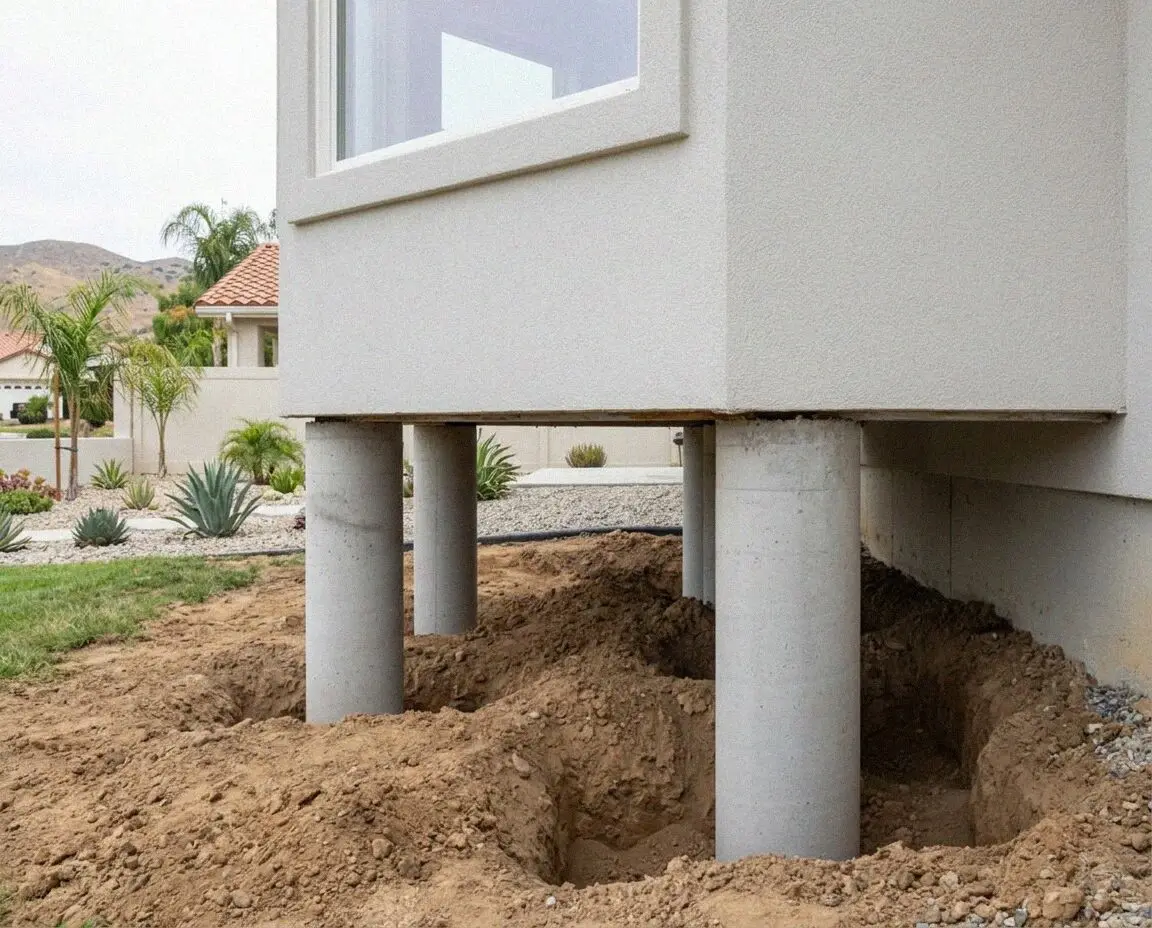
Has your slab dropped from drying soil? We lift residential concrete to grade and stabilize subgrade across Moreno Valley to 4000 PSI.
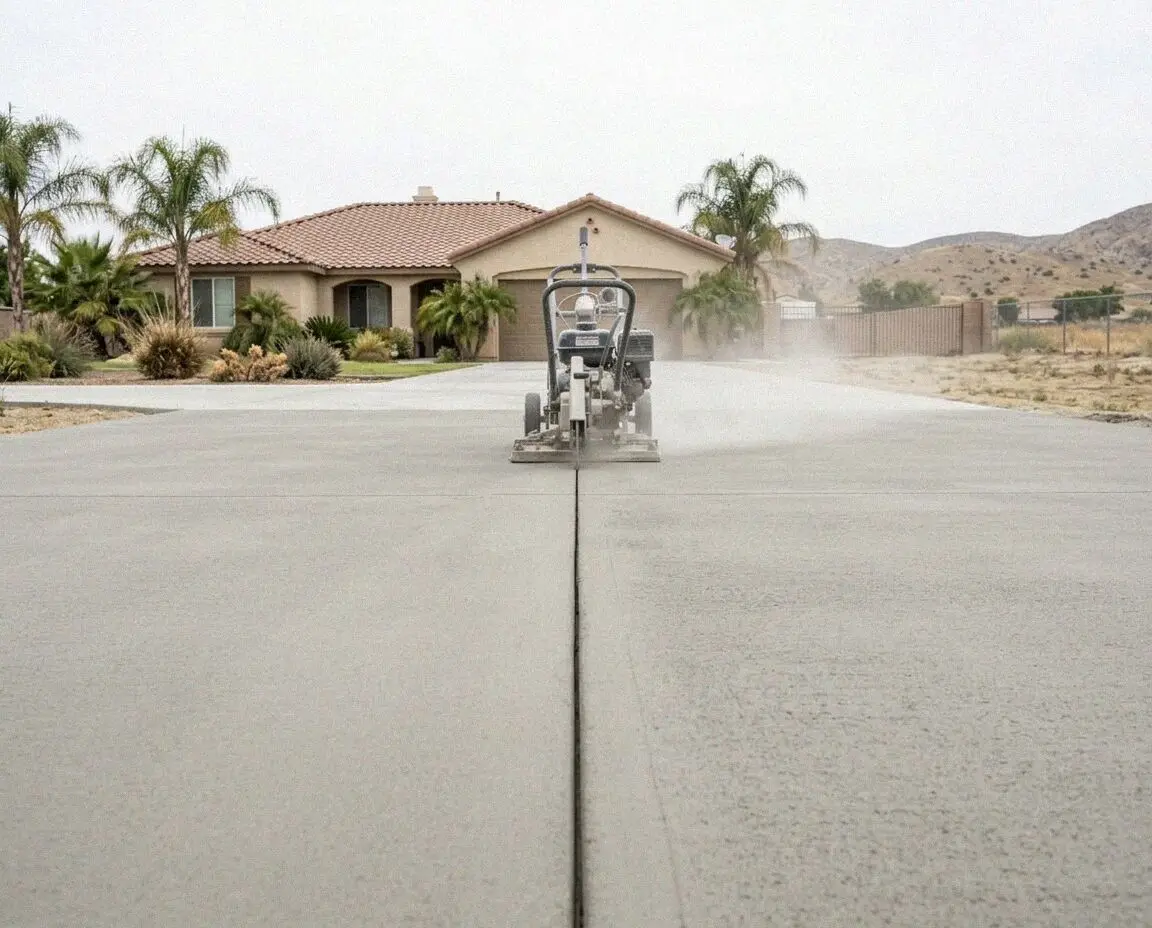
Need clean slab separation without shattering nearby pads? We cut up to 10 inches deep using wet diamond blades that stop fracture paths.
Terrence Boyd runs all four steps himself: he takes the call, measures the lot, stands over the pour and walks the finished slab with you.
Call or send the form. Terrence Boyd rings you back within 1 business day and books the free site visit inside that week.
He measures the work and cuts into the subgrade to see what the clay is doing, then itemizes demolition, base, pour and cleanup.
Approve it and we file through SimpliCITY, book the crew, then run demolition, base, forms, the pour and the finish.
We clear up, then go over the finished slab against what the estimate said: thickness, joints, edges and fall. We close when you agree.
The classification is C-8 Concrete, registered with the California Contractors State License Board and checkable there by the business name. Liability insurance runs on every job, so a warehouse apron off Perris Boulevard is covered the same way a back garden patio is.
Terrence Boyd started here in 2022 after 12 years on Inland Empire crews. Which streets went in before 1990, where the clay stops and the decomposed granite starts on the climb to Box Springs, and how long SimpliCITY takes to turn a permit round: all known first-hand.
The visit costs nothing, and on a lot here it begins with a spade rather than a tape: how far the clay has to come out before base goes back decides most of the figure. Demolition, base, pour, finish and cleanup are then itemized in writing before you decide anything.
Every pour is covered by a written workmanship guarantee against defects in how it was built. The claim that comes up here is a panel dropped because the clay under it was left as found, ours to put right. Seasonal swelling and ordinary wear are not defects, and we say so up front.
Questions before you decide? (951) 555-0173 or send us a message.
Customer Reviews
Three jobs in three parts of the city, Towngate, Sunnymead Ranch and Rancho Belago, described by the people who paid for them, with what went down and how it has held since.
“Our place in Towngate went up in 1989 and the driveway had never been touched. They broke out 500 square feet, dug the clay down to firm ground and poured 5 inches. Terrence cut the joints himself that afternoon before the crew left.”
“The garage floor in our Sunnymead Ranch house was lifting along one crack and catching the door. They took the whole 440 square feet out, put a proper base under it and re-poured at 5 inches. Two summers on, the door swings clean.”
“Our patio out in Rancho Belago was the builder original and had split right across. They lifted it, dug into the clay and laid 360 square feet with a broom finish and a joint every 10 feet. They sealed it four weeks later, and it has held through two Julys.”
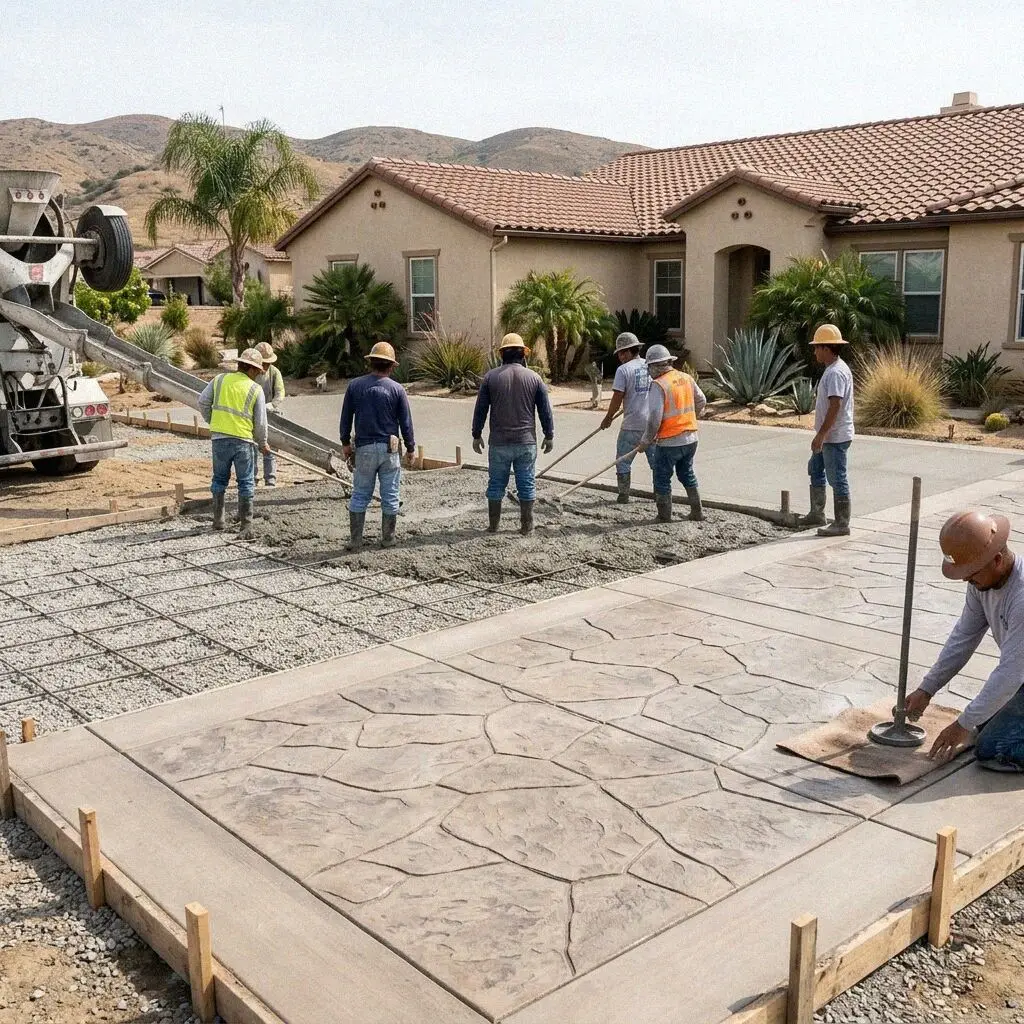
About Moreno Valley Concrete Pro
Moreno Valley Concrete Pro is a concrete contractor working out of Alessandro Boulevard, in the middle of the city rather than at the edge of it. Terrence Boyd started the business in 2022 after 12 years on Inland Empire crews, and the work runs from residential flatwork to warehouse aprons across 20 cities in Riverside and San Bernardino counties.
Moreno Valley voted itself into existence in December 1984, when Sunnymead, Edgemont and Moreno merged, and the population has gone from under 50,000 to more than 207,000 in the forty years since. Almost every driveway, patio and garage floor in the city was poured inside that window, which means the whole town is reaching the end of its flatwork at roughly the same time.
The C-8 Concrete classification is active with the California Contractors State License Board and held in Terrence Boyd's own name; liability insurance on every job covers your property while the crew is on it. Permits go in through SimpliCITY, the City's own portal, and we meet the Building & Safety inspector rather than leaving that to you. Every estimate is measured and written on site.
Our Standard
Every pour is built to the same specification: the clay is dug out below the layer that moves, base goes back in compacted lifts, the slab is 4 to 6 inches to the load it carries, and the joints are cut before the crew leaves.
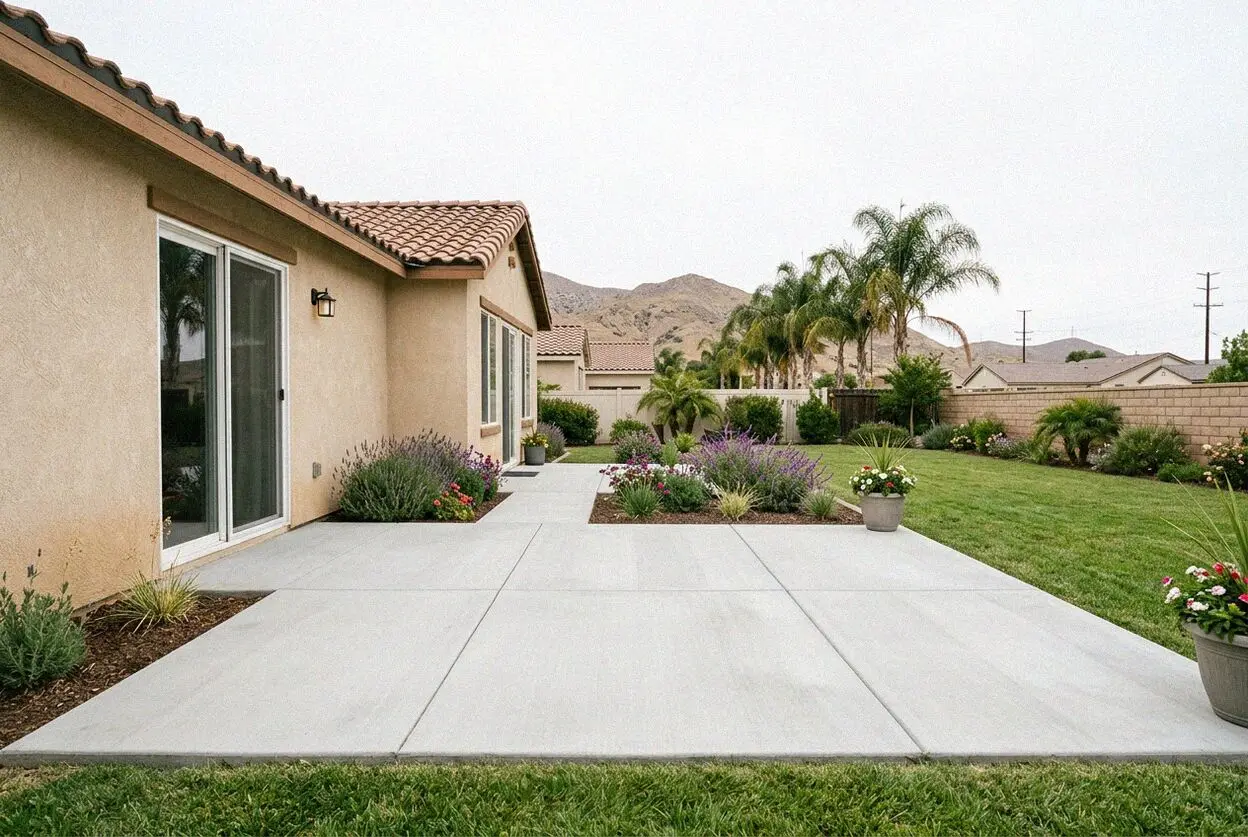
These are streets you already drive, a driveway in Towngate, a garage floor in Sunnymead Ranch, a wall on a graded lot out at Moreno Beach. Near enough to detour past on the way home.
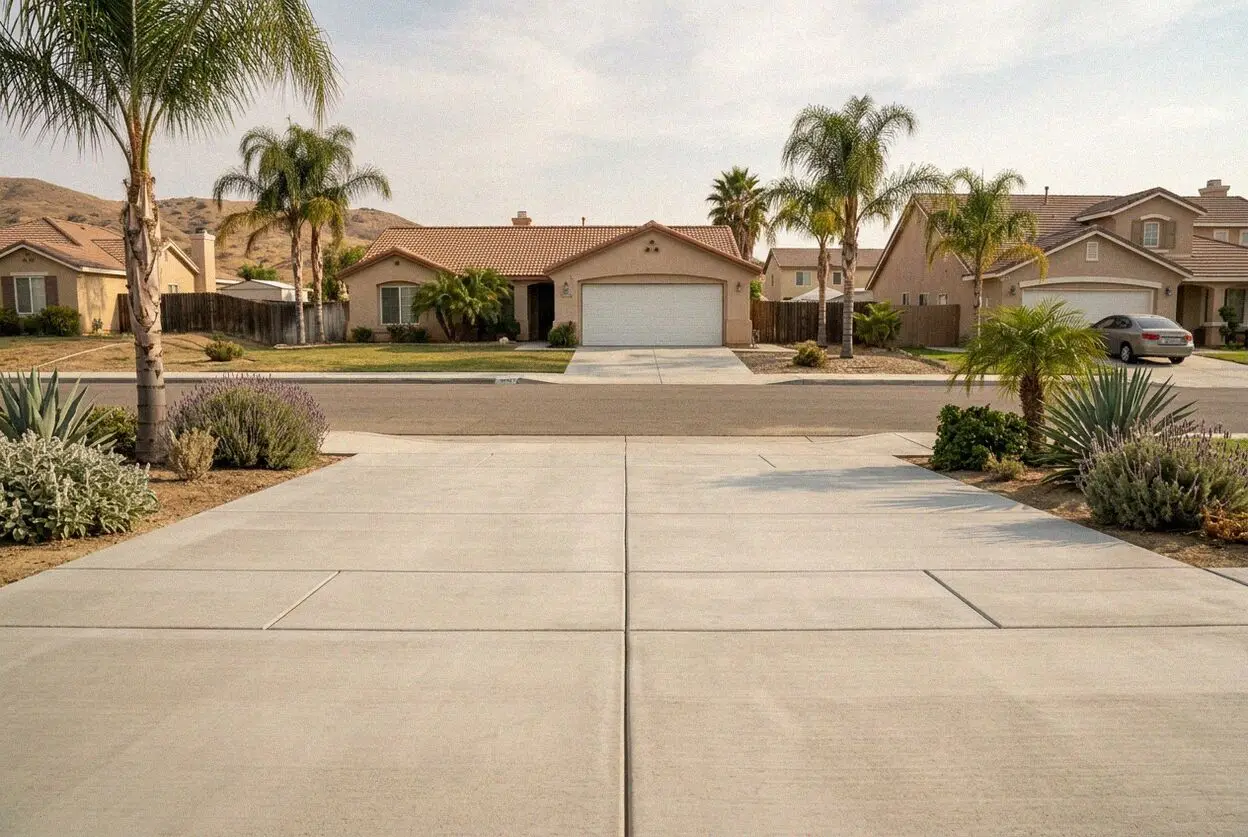
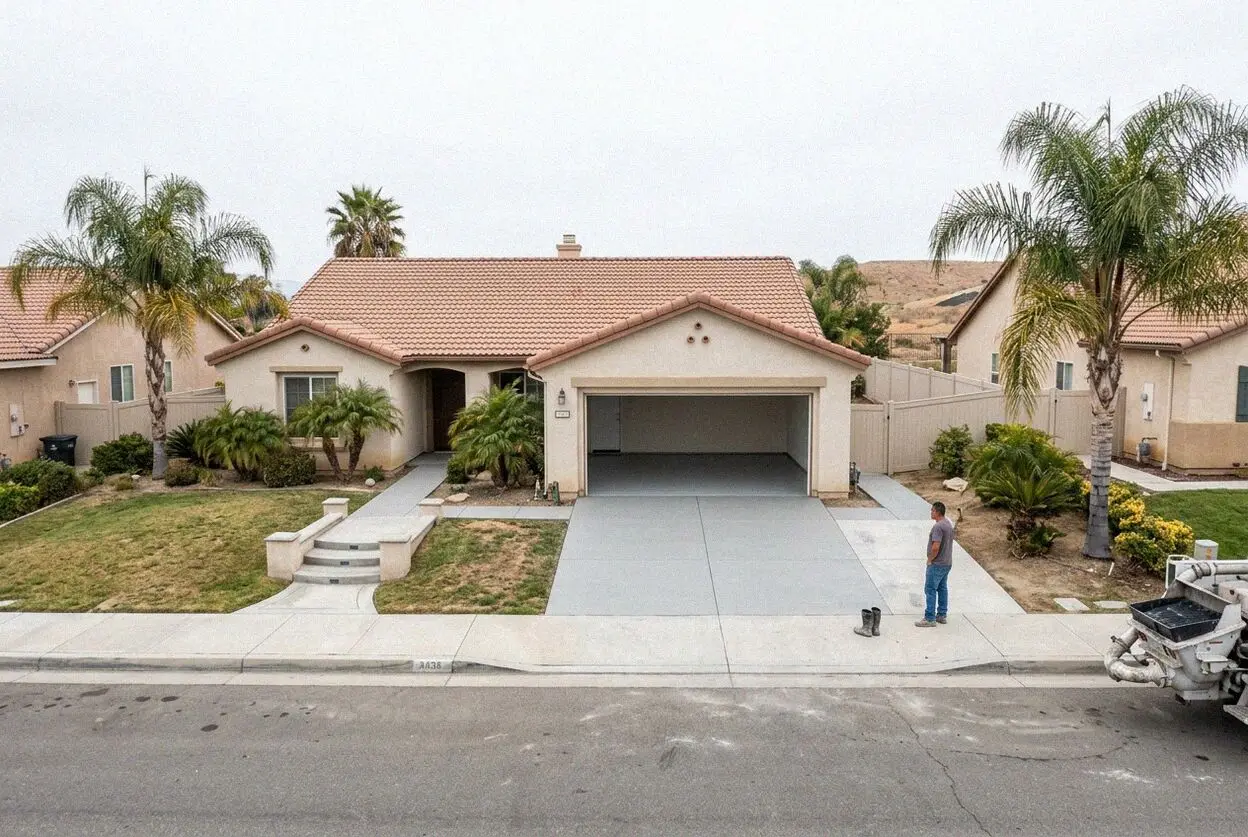
440 sq ft at 5 in · Original slab broken out
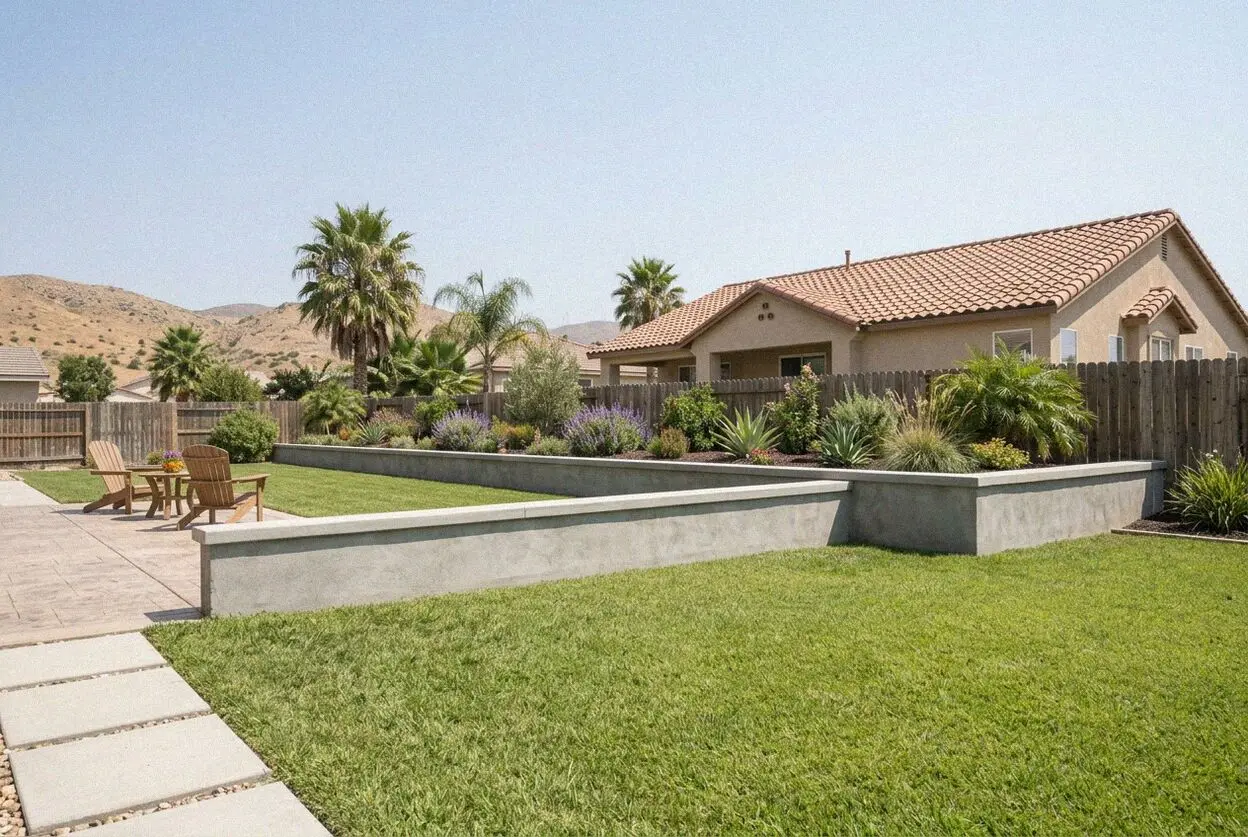
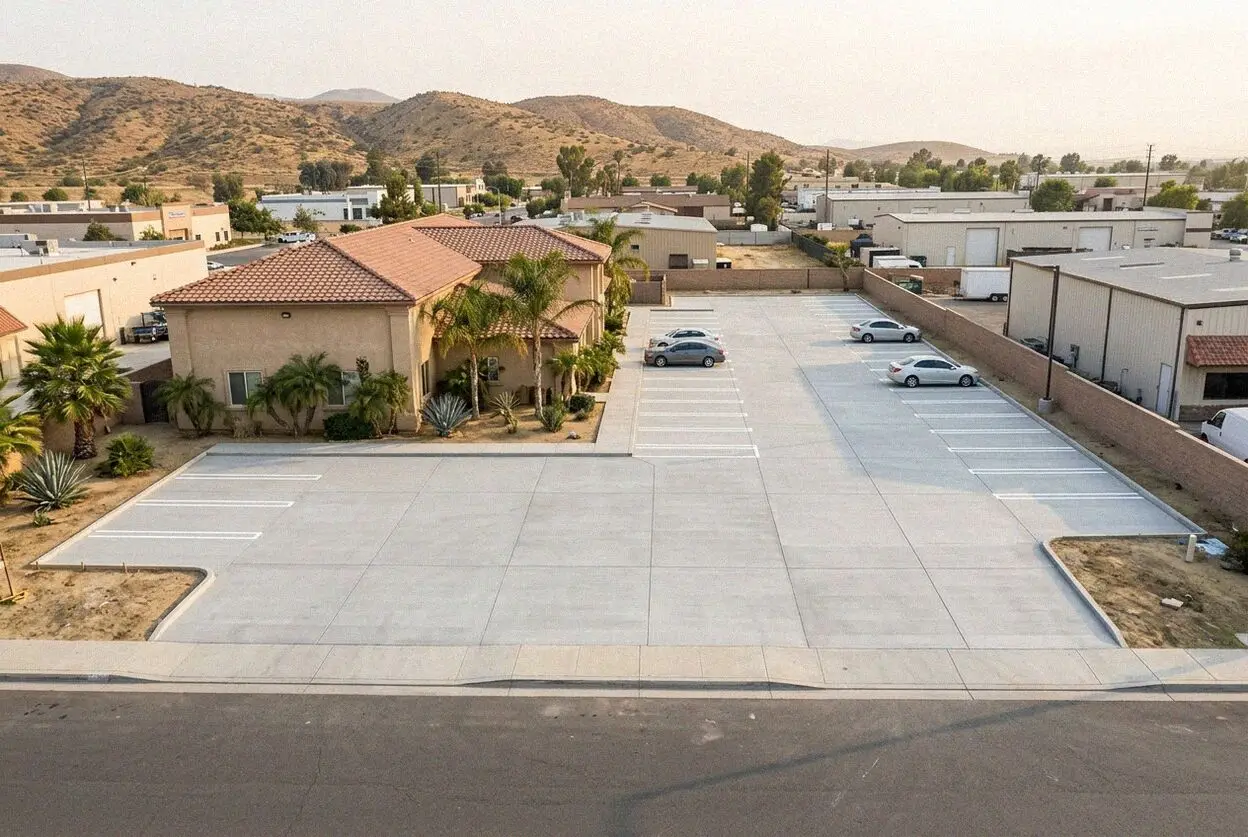
3,200 sq ft at 6 in · Poured over two weekends
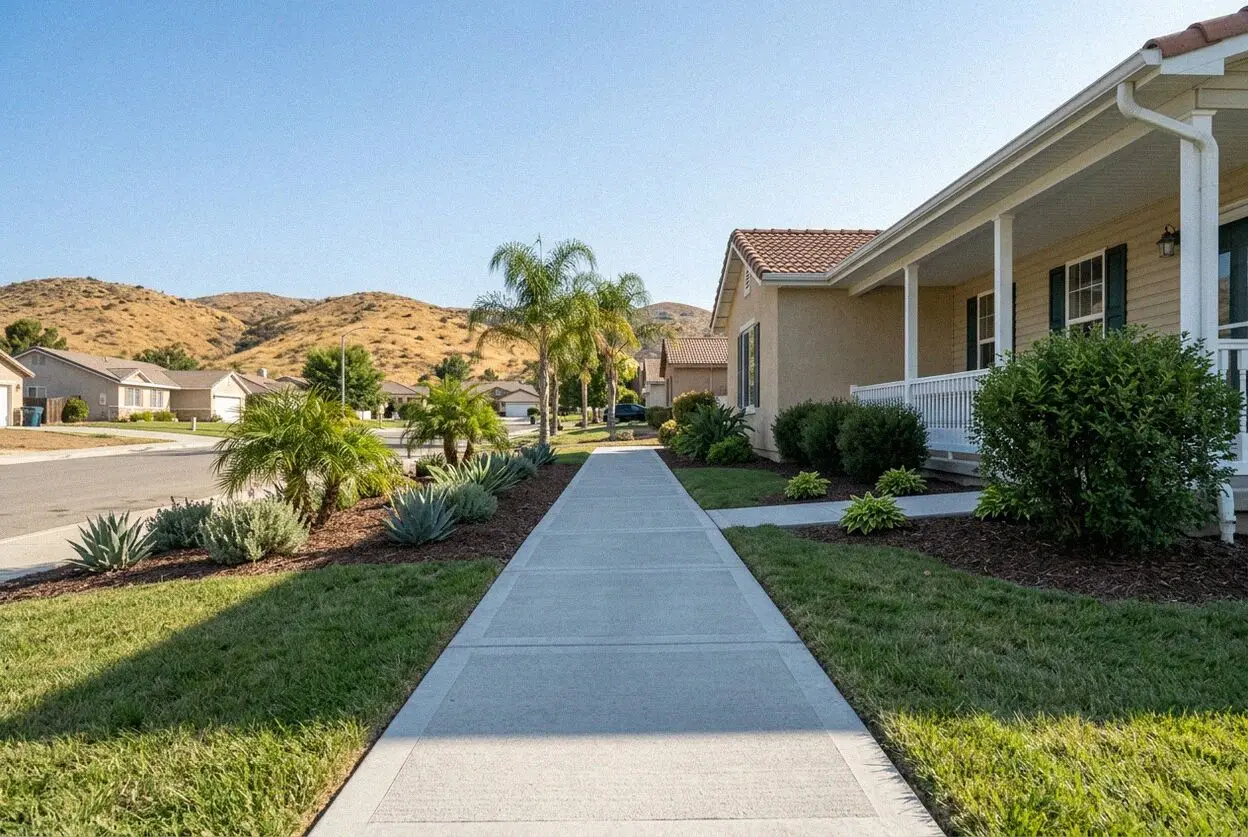

Terrence Boyd founded Moreno Valley Concrete Pro in 2022 after 12 years on Inland Empire crews, most of it on tract flatwork between the 60 and the 215. The C-8 classification is in his own name, he lives off Sunnymead Boulevard about ten minutes from most of the work, and he is at the property for the measuring and back again for the pour.
Local Knowledge
A city only forty years old, ground that swells on the flat and ravels on the slope, and a permit counter that is now a website, an estimate written here has to answer for all three.
Moreno Valley is one of the youngest large cities in California: Sunnymead, Edgemont and Moreno voted to incorporate on 3 December 1984, with 49,702 people between them. What followed was almost all tract housing, Towngate and Sunnymead Ranch through the late 1980s, Moreno Beach and Rancho Belago through the 1990s and 2000s. A 1988 driveway is 4 inches on native clay with nothing built under it, and it turns 38 this year.
The valley floor is expansive clay. It takes on water in a wet winter, swells, and gives it back by September, and California code calls a soil expansive above an Expansion Index of 20, a line most of the flat ground here sits above. Up against the Box Springs Mountains the soil turns to decomposed granite, which drains but ravels out from under a slab edge. Your own lot is on the USDA Web Soil Survey.
Permits are issued by the Building & Safety Division at the City of Moreno Valley, and every type goes in through SimpliCITY, the City's online portal, rather than over a counter. Work at the curb, in the parkway or across the public walk needs an encroachment permit as well. We file both and meet the inspector. We pour the whole city, from the older blocks off Sunnymead Boulevard to the newest streets east of Moreno Beach Drive.
On this ground and in this heat concrete is the surface that stays put: it bridges clay that lifts and drops with the season, where asphalt goes soft over 100 degrees and pavers follow the movement one at a time until the drive is no longer level.
| Option | Lifespan | Ready to use | Maintenance | On clay, at 105 degrees |
|---|---|---|---|---|
| Poured concrete | 30-40 years | 24-48 hrs on foot, 7 days for cars | Reseal every 2-3 years | Rigid through a 105-degree afternoon; joints take up the clay movement |
| Asphalt paving | 15-20 years | Cars back on in 2-3 days | Sealcoat every 2-3 years | Goes soft above 100 degrees |
| Interlocking pavers | 25-50 years on a good base | Walk on it the same day | Re-sand joints every 1-2 years | Follows the clay up and down, then ruts and weeds at the joints |
Asphalt is cheapest to lay and dearest to keep. Pavers are the reverse, and want lifting and resetting wherever clay has moved. Concrete sits between the two.
It pulls water out of the surface before the concrete beneath has gained strength, and the shrinkage tears the top. Pours here start before 8 AM, and the surface is kept wet for the 7-day cure the Portland Cement Association sets out.
Yes. Most failures start under the slab rather than in it. A compacted base spreads the load and lets water away from the underside; without one the slab spans the soft spots until it breaks over one. It is the part of a driveway nobody sees again.
Because expansive clay takes on water through winter and swells, then dries and shrinks back by September, carrying the slab up and down with it. On the valley floor that cycle runs every year. We dig below the layer that moves, compact base in lifts and joint tighter.
Because it shrinks as it cures and will crack somewhere, and a joint decides where. They go 2 to 3 feet apart for every inch of thickness, so a 5-inch driveway is jointed at 10 to 15 feet. They are cut the day it goes down, not the morning after.
Not for a patio slab, the city's own permit FAQ says so in as many words. Anything at the curb or across the public walk takes an encroachment permit, and a retaining wall over 3 feet takes a building permit, a foot lower than the state draws that line.
Four inches carries feet and cars; a truck, an RV or a workshop floor wants 5 to 6. In a town where a good share of drives hold a work truck, that inch is the difference between a slab that lasts and one that cracks in three years. What we pour is on your estimate.
Cost, thickness, base, joints, sealing, permits, timing and what the guarantee actually covers, answered for the ground and the weather this city has, rather than in general.
Thickness moves the figure before size does: an inch added to a 4-inch slab is a quarter more concrete again, and more base beneath it. Then it is how much old surface has to come out, how deep the clay is dug before base goes back, and the finish you want. All four get measured on a free site visit and written down.
It is priced on area, thickness and what is underneath. Almost every drive in this city is the builder original, poured between 1985 and 2005 straight onto clay, so the breaking out and the digging are where one job differs from the next. We measure the frontage, open the ground and write it out line by line at the property.
A patio is normally 4 inches on compacted base, so size, access and finish move the number. The tract lots here nearly all have a side gate a machine fits through, which keeps the labor down; the exceptions are the older Sunnymead lots with a fence line tight against the house, where it is barrows.
Four inches under cars, 5 to 6 where a truck, an RV or a trailer parks, and on the streets near March Air Reserve Base and the yards off Perris Boulevard, that is a lot of drives. An inch short does not show for two summers and then cracks under normal use, and no repair puts it back. What we pour is on the estimate.
Because a slab only performs as well as what it rests on, and most failures begin underneath. Compacted base spreads load and drains water off the underside. On Moreno Valley clay that means excavating past the layer that moves, then bringing base back up in compacted lifts rather than one dump and a plate over it.
Two to three feet apart for every inch of thickness: a 4-inch patio is jointed at 8 to 12 feet, a 5-inch driveway at 10 to 15. The joint gives shrinkage a straight line to follow instead of a wandering one. Over ground that lifts and drops with every season we take the spacing to the tight end of that range.
The clay across the valley floor does, if a slab is poured on it as found. It swells through a wet winter and shrinks back by September, and a slab carried through that on no base breaks over the middle. The decomposed granite up toward the Box Springs Mountains behaves better but ravels out from under an edge. Both are dealt with below the concrete.
Late fall to early spring, when afternoons stay under 90 degrees. July and August average in the mid-90s at March Field, the nearest weather station, and that heat takes water out of the surface before the slab has set. Summer pours go ahead anyway, started before 8 AM and kept wet for the full seven days.
Yes, and sooner here than nearer the coast. Concrete stays porous until it is sealed, so oil and water soak in and mark it for good, and the ultraviolet load this far inland takes the color out of stamped work. Reseal every 2 to 3 years, and at the near end of that on a drive facing west.
Three to five working days on site for most residential jobs, plus the curing. On a drive here the first day and a half usually goes on breaking out the original slab and digging the clay from under it. Foot traffic at 24 to 48 hours, cars at 7 days, anything heavy at 28.
Not usually, if it sits inside your lot line, the city's own permit FAQ says a patio slab needs no permit, and the Residential Code exempts driveways and sidewalks. The curb, the driveway approach and the public walk are right-of-way and take an encroachment permit; a retaining or block wall over 3 feet takes a building permit, a foot lower than the state line. Both go in through SimpliCITY and we file them.
Yes. What is guaranteed in writing is the way it was built, the base, the thickness, the joints, the finish, and the terms sit on the estimate you sign. A panel that dropped because the clay under it was never dug out is ours to come back for. Wear, staining and ground movement past what the joints were built to hold are not defects, and that is said before you sign.
Service Area
Moreno Valley is home, but the work has never stopped at the city line. The towns below are the ones the crew pours in year after year, find yours, or call and ask, because the answer is usually yes.
 Open the Moreno Valley Office in Google Maps
 Call or send the form and Terrence Boyd comes back to you within 1 business day. He drives out, measures the work, opens the ground where the clay starts and writes the figure at your table, itemized line by line. Nothing is booked until you say so.